Investigation
NBA Player Caught Betting: The Full Story Behind the 2025 Gambling Scandal
Where the Court Meets the Courtroom
By Sports Betting Integrity Analyst
 Available in US
- Introduction
- The Scandal in Five Numbers
- How the Biggest NBA Betting Scandal Unfolded
- Every Player, Coach, and Associate Charged
- Why Prop Bets Made NBA Games a Target
- The Jontay Porter Case: A Warning That Went Unheeded
- La Cosa Nostra’s Role in the NBA Poker Ring
- The $167 Billion Industry Behind the Scandal
- How Suspicious Bets Get Flagged — and Why Some Slip Through
- The NBA’s Damage Control: New Rules, Old Tensions
- Congress Steps In: Senate and House Demands
- What Comes Next for the NBA and Sports Betting
- Frequently Asked Questions
Introduction
34 — the number of people arrested on a single October morning in 2025, in what the FBI called the biggest sports betting bust in American history.
I have spent nine years picking apart the seams of basketball betting markets, tracking line movements, flagging irregular props, and consulting on integrity cases that never made the papers. In all that time, nothing prepared me for the morning of 23 October 2025. I was watching the alerts roll in on my terminal before most of the American East Coast had finished its first coffee: active NBA players, former coaches, associates with documented ties to organised crime families — all swept up in a pair of coordinated federal operations. The sheer scale of it felt surreal.
The names hit like a highlight reel gone wrong. Terry Rozier, an established guard with nearly a decade in the league. Chauncey Billups, a five-time All-Star and NBA champion who had transitioned into coaching. Damon Jones, a former player turned assistant coach. These were not fringe figures. They were people whose faces sold tickets, whose names anchored franchise marketing campaigns, whose performances millions of bettors wagered on every night of the season.
What made this scandal structurally different from every predecessor — from the 1951 CCNY point-shaving ring to Tim Donaghy’s referee-fixing scheme — was the ecosystem it exposed. The 2025 case did not emerge in spite of legalised betting. It emerged because of it. Americans legally wagered $166.94 billion on sports that year, a figure that has more than doubled since the Supreme Court opened the floodgates in 2018. Proposition bets on individual player stats — points, rebounds, assists in a single game — had grown into a market segment so vast and so lightly monitored that a single player could move the needle on millions of dollars by simply deciding not to try. And that, reduced to its simplest form, is exactly what happened.
This investigation traces the full arc: the arrests and the FBI operations that produced them, the individual cases against Rozier, Billups, and Jones, the prop-bet mechanics that made manipulation possible, the Jontay Porter precedent that the league failed to learn from, the organised crime connections, the $167 billion market that turned every play into a financial product, and the political fallout that is still unfolding. I have drawn on court filings, integrity monitoring data, industry financial reports, and conversations with people inside and around the investigation. This is the most complete account available of how professional basketball’s integrity crisis reached a breaking point — and what it means for everyone who watches, plays, or bets on the game.
The Scandal in Five Numbers
- Thirty-four people were arrested on 23 October 2025 in the largest sports betting bust in American history, including active NBA players, former coaches, and associates of La Cosa Nostra crime families.
- The scandal centred on player proposition bets — markets where a single individual can unilaterally control the outcome — within a $166.94 billion annual US sports betting industry.
- Jontay Porter’s 2024 lifetime ban for a $54,000 betting scheme served as a proof of concept that the league failed to act on before the larger ring was exposed.
- Integrity monitoring systems flagged the anomalies, including $263,000 in suspicious bets on a single Rozier game, but the gap between detection and enforcement allowed the scheme to operate for over two years.
- Congressional scrutiny from both the Senate and House, combined with $165 billion in franchise value at risk, means the regulatory and financial fallout is still unfolding.
How the Biggest NBA Betting Scandal Unfolded
I remember exactly where I was when the first indictment rumours surfaced: a hotel room in Atlantic City, ironically enough, attending an industry conference about responsible gambling innovation. The whispers started late on a Tuesday evening, and by dawn the Department of Justice had made it official.
The scandal broke through two parallel federal operations that converged on the same October morning. Operation “Nothing But Bet,” run out of the Eastern District of New York, targeted a betting manipulation ring that had exploited insider information from active NBA personnel to place winning wagers on player proposition markets. Operation “Royal Flush,” led by the Southern District of New York, dismantled a separate but overlapping network of rigged high-stakes poker games that had ensnared NBA players, coaches, and associates — with profits flowing to members and affiliates of La Cosa Nostra crime families.
December 2022 — Federal investigators begin monitoring suspicious betting patterns on NBA player prop markets. Wiretaps are authorised on multiple phone lines.
January 2024 — Jontay Porter is flagged by U.S. Integrity for aberrational betting activity on his own games. NBA launches internal investigation.
March 2024 — FBI investigation expands beyond Porter’s circle. At least seven NBA games between December 2022 and March 2024 are identified as targets of insider-driven wagers.
April 2024 — Porter receives a lifetime ban from the NBA. The league tightens prop-bet monitoring for two-way contract players.
23 October 2025 — Thirty-four people arrested simultaneously across multiple states. Two separate federal indictments unsealed. Press conference features FBI Director Kash Patel and senior DOJ officials.
Late October 2025 — NBA issues internal memo to all 30 teams. U.S. Senate Commerce Committee demands briefing from Adam Silver.
Early 2026 — Damon Jones agrees to plead guilty, becoming the first defendant to accept a plea deal.
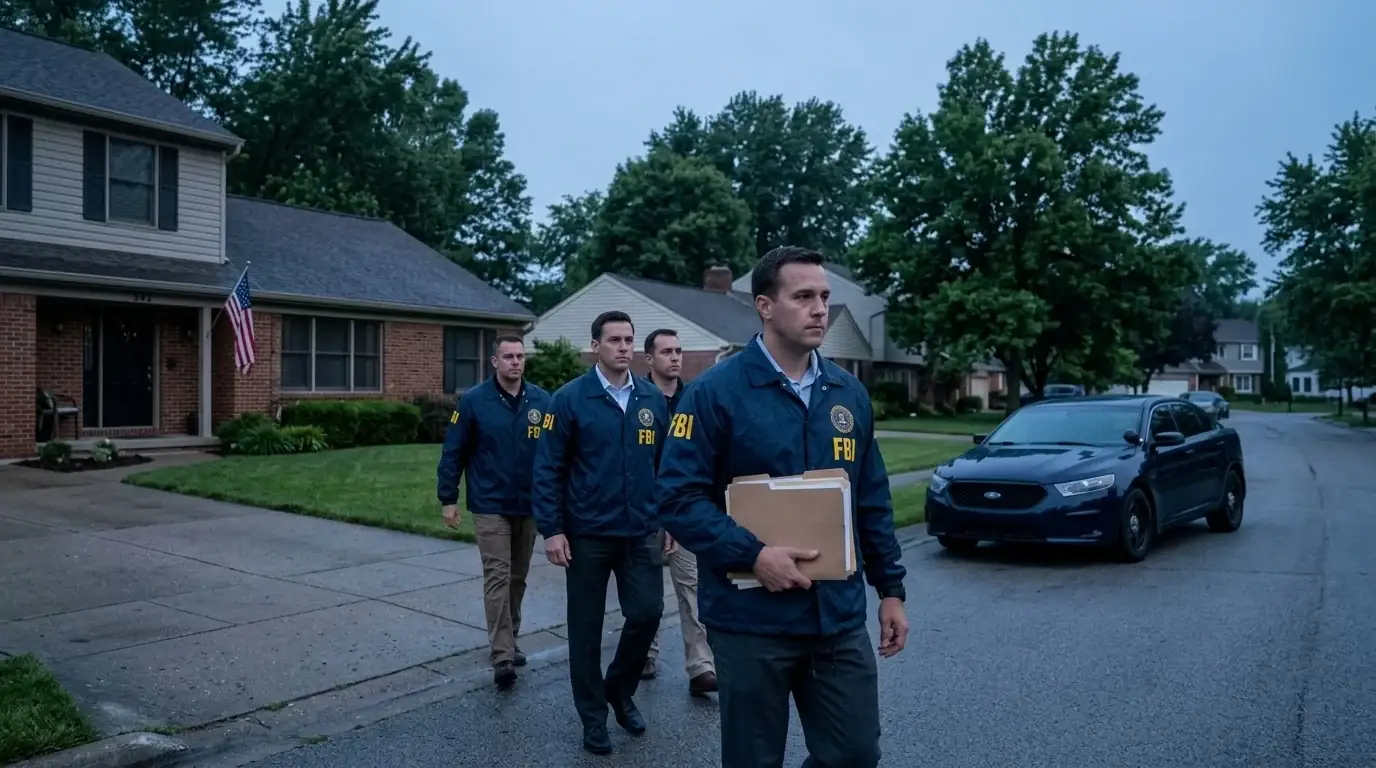
The twin operations produced 34 arrests in a single day. FBI Director Kash Patel stood at the podium and chose his framing carefully: “Let’s not mince words. This is the insider trading saga for the NBA.” It was a deliberate rhetorical move — borrowing the language of Wall Street to signal that sports betting manipulation would be prosecuted with the same federal muscle traditionally reserved for financial crimes.
The FBI’s framing as “insider trading” was not metaphorical. The wire fraud conspiracy charges carry up to 20 years’ imprisonment, and the money laundering conspiracy charges carry the same. These are the tools federal prosecutors use when they want maximum leverage.
What made the timeline so damning for the league was the gap between the Porter ban in April 2024 and the wider arrests eighteen months later. The FBI’s investigation had been running concurrently with the NBA’s own internal inquiry into Porter, but the bureau’s scope was far broader. While the league was publicly congratulating itself for catching one bad actor, federal agents were listening to phone calls that implicated people at a far higher level of the sport. Between December 2022 and March 2024 alone, the group had placed bets on at least seven NBA games using information that never appeared on any public injury report. The full account of how the FBI built its case reveals just how methodical that process was — and how long it took.
The public reaction was immediate and visceral. Adam Silver appeared on Amazon Prime Video the night after the arrests and acknowledged the severity without reservation — describing the moment as “deeply disturbing” and admitting he had felt physically ill at the news. For a commissioner who had championed the legalisation of sports betting and brokered lucrative partnerships with sportsbook operators, the words carried an uncomfortable weight.
Every Player, Coach, and Associate Charged
When you work in integrity monitoring long enough, you develop a kind of mental shorthand for scandal profiles. There is the desperate low-earner, the reckless high-roller, the unwitting accomplice. The 2025 NBA case shattered those categories. The defendants ranged from minimum-salary players to decorated champions, from active coaches to retired veterans turned television analysts, and from gambling intermediaries to made members of organised crime families. Victims of the rigged poker scheme alone lost more than $7 million, according to Christopher Raia, the FBI’s Assistant Director in Charge for the New York Field Office, who described the operation as a “financial funnel for La Cosa Nostra.”
34
Total arrests on 23 October 2025
2
Separate federal indictments (SDNY and EDNY)
$7M+
Losses from rigged poker games
7+
NBA games targeted by insider-driven bets
The following three profiles cover the most prominent figures charged. Each case illuminates a different facet of the scandal: Rozier exposed the prop-bet manipulation pipeline, Billups revealed the organised crime nexus, and Jones demonstrated what happens when one defendant decides to cooperate.
Terry Rozier: From All-Star Guard to Federal Defendant
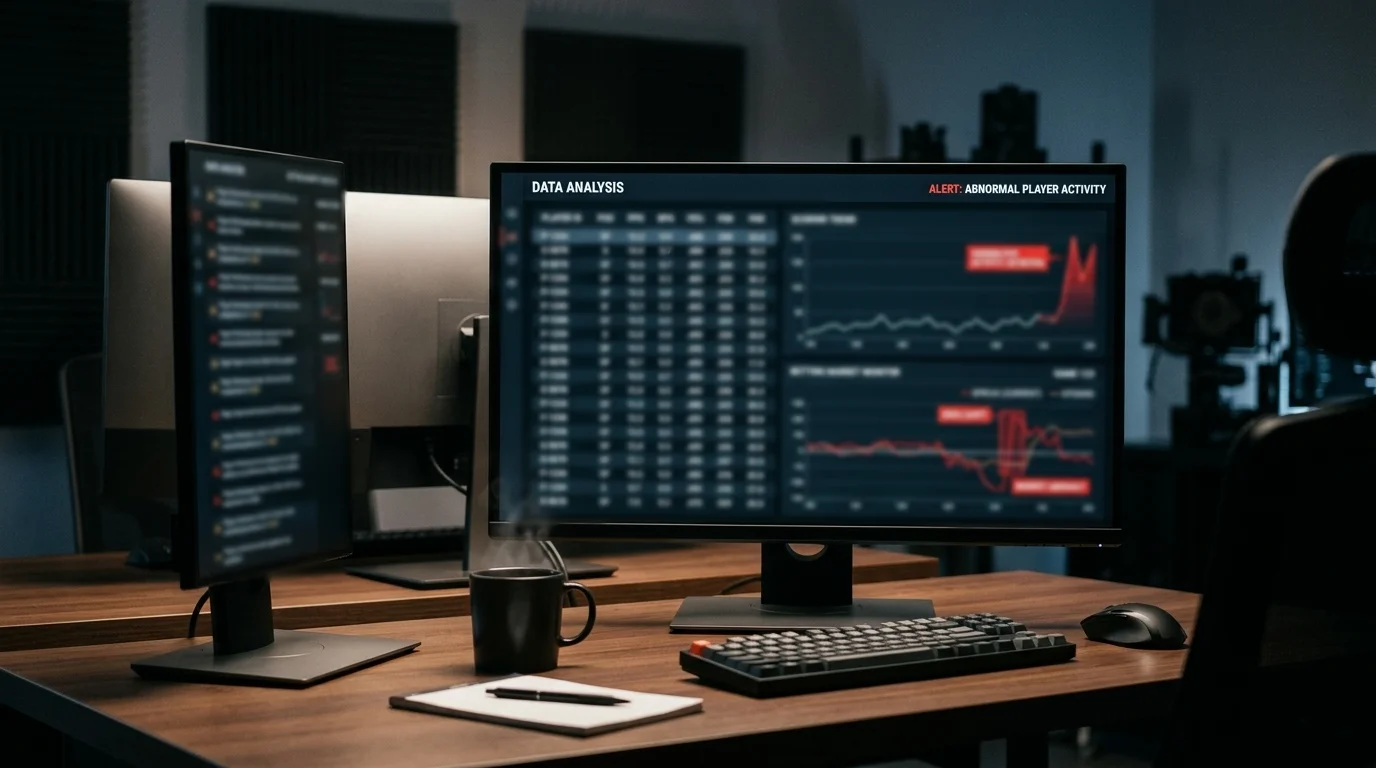
Terry Rozier’s involvement is the case that stings most if you follow prop markets closely. Here was a player earning well above the league average — a guard who had been trusted with a significant contract by the Charlotte Hornets — allegedly feeding insider information about his own availability and performance intentions to associates who then hammered the prop lines. The numbers were not subtle. U.S. Integrity flagged $263,000 in suspicious prop bets placed on Rozier’s individual performance lines for a single game on 23 March 2023, detected in real time by the monitoring platform’s algorithms.
The $263,000 wagered on Rozier’s props in one game dwarfed the typical volume for a mid-season fixture involving a non-contending team. For context, daily prop-bet handle on an individual player rarely exceeds $50,000 in a regular-season game without a marquee matchup. The spike was roughly five times the expected volume — the kind of anomaly that immediately triggers an integrity alert.
What made Rozier’s case so significant was not just the dollar figures. It was the mechanism. According to the indictment, Rozier did not place the bets himself. He provided nonpublic information — details about his health, his expected minutes, his likely game-day status — to people outside the organisation, who then used that edge to bet on proposition markets where his personal statistical output was the product. This was not a player gambling on games. This was a player becoming the inside source in a financial operation. The full picture of Rozier’s federal charges and legal defence strategy makes clear just how far this went beyond a casual wager.
One anonymous NBA player agent, speaking to reporters after the arrests, offered a blunt assessment: “Surprised they got caught. But not surprised, as [gambling] is happening everywhere.” That comment haunted me for weeks. Not because it was shocking — I had heard similar sentiments in private — but because it suggested the problem was systemic, not individual.
Chauncey Billups: The “Co-Conspirator 8” Revelation
Chauncey Billups was not initially named in the public filings. He appeared in the first indictment as “Co-Conspirator 8,” a designation that sent the basketball media into a frenzy of speculation. Within 48 hours, investigative reporters had matched the biographical details — five-time All-Star, NBA Finals MVP, former head coach of the Portland Trail Blazers — and the mask was off.
The Billups case sits at the intersection of the two operations. The EDNY indictment linked him to the betting manipulation scheme, while the SDNY indictment connected him to the rigged poker ring run by associates of La Cosa Nostra families. Wire fraud conspiracy and money laundering conspiracy — those were the charges. For a man who had spent two decades as one of the most respected figures in professional basketball, the fall was staggering.
What struck me most, reviewing the court documents, was how the poker ring worked as a gateway. Billups did not reportedly wake up one morning and decide to fix bets. The progression, as outlined in the filings, moved from high-stakes card games with increasingly dubious company to deeper entanglement with people who had very different motives. The detailed account of Billups’s arrest and the Co-Conspirator 8 identification traces that trajectory from locker room to federal courthouse.
The question that now hangs over his legacy is whether a criminal conviction would disqualify him from the Basketball Hall of Fame. There is no precedent for it — the Hall has never formally stripped or blocked a candidate over a gambling offence. But then, no Hall of Fame candidate has ever faced charges like these.
Damon Jones: First Plea Deal and What It Signals
Damon Jones’s name might not carry the same weight as Rozier’s or Billups’s outside basketball circles, but his decision to plead guilty early in 2026 sent the most consequential signal of the entire proceedings. Jones, a former NBA player who had moved into coaching and media work, agreed to a plea deal on wire fraud conspiracy charges — making him the first defendant in the case to formally cooperate.
The text messages cited in the filings were remarkably direct. “Get a big bet on Milwaukee tonight” — that was the kind of message prosecutors dream about. No code words, no encrypted apps, just a plaintext instruction sent to an associate with access to betting accounts. For someone who spent years advising players on professionalism, the brazenness was breathtaking.
Jones’s cooperation matters because federal plea deals are transactional. Prosecutors do not offer reduced sentencing recommendations out of generosity. They do it because the cooperating witness has something to give — testimony, documents, or corroboration that strengthens the case against co-defendants. If Jones has agreed to testify, the pressure on Rozier, Billups, and the remaining defendants increases significantly.
Why Prop Bets Made NBA Games a Target
If you had asked me five years ago which market type would eventually blow up a major North American sports league, I would have said player props without hesitating. The logic was always obvious to anyone working in integrity: when you create a tradeable instrument that is determined by the behaviour of a single individual who knows in advance how he intends to perform, you have built a market that can be rigged by exactly one person.
Proposition bet (prop bet) — a wager on a specific event or statistical outcome within a game, rather than the game’s final result. In basketball, common player props include total points, rebounds, assists, or three-point shots made by a named player.
Same-game parlay — a single bet combining multiple outcomes from the same fixture. A bettor might combine “Player A over 20 points” with “Player B over 8 rebounds” and the game total under a certain number. Because the legs are correlated, the odds multiply — creating large potential payouts from relatively small stakes.
Traditional game lines — the spread, the moneyline, the total — require coordination among multiple participants to manipulate. You cannot reliably fix the outcome of an NBA game with one player’s cooperation because basketball involves ten players on the court and is influenced by coaching decisions, opponent quality, and random variance. But a player prop? A single individual can decide to exit a game early with a fabricated injury. He can choose not to shoot when open. He can take himself out of the action in ways that are virtually invisible to casual observers but catastrophically obvious to anyone watching the betting lines.
Traditional game lines
Outcome depends on full team performance. Requires multiple participants to fix reliably. Heavily monitored with deep liquidity. Odds set by sophisticated models with large sample data.
Player prop markets
Outcome depends on a single individual. One participant can shift the result. Thinner liquidity and less monitoring depth. Odds based on limited per-player statistical models.
In-play betting has compounded the problem. Live wagers now account for 62.35% of the entire online sports betting market in the United States — meaning the majority of money is placed while the game is in progress. A player who leaves the court after six minutes of a first quarter does not just tank his own stat line. He triggers a cascade of live prop adjustments and same-game parlay outcomes that can affect millions of dollars in real time. The NBA acknowledged this vulnerability directly in an internal memo, noting that “proposition bets on individual player performance involve heightened integrity concerns and require additional scrutiny.”
The full mechanics of how NBA prop bets get exploited reveal a vulnerability that is architectural, not accidental. Prop markets were not designed for a world where the underlying asset — a player’s performance — could be unilaterally manipulated by the asset itself.
The Jontay Porter Case: A Warning That Went Unheeded
Before there was an FBI press conference and 34 arrests, there was a 24-year-old forward on a two-way contract who thought he could beat the system with a burner account and a few friends who knew how to place bets. Jontay Porter’s case, which resulted in a lifetime ban from the NBA in April 2024, was supposed to be the league’s wake-up call. Looking back, it was more like an alarm clock that got snoozed.
Porter placed at least 13 bets through a third party’s account, wagering $54,094 and collecting $76,059 in payouts — a net profit of roughly $22,000. The amounts were modest by NBA salary standards, but the method was brazen. Porter bet on his own games, manipulated his own performance to influence outcomes, and shared nonpublic information about his health status with associates who placed their own wagers. Adam Silver’s response at the time left no ambiguity: “There is nothing more important than protecting the integrity of NBA competition for our fans, our teams and everyone associated with our sport, which is why Jontay Porter’s blatant violations of our gaming rules are being met with the most severe punishment.”
One of Porter’s associates placed a parlay worth $80,000 with a potential payout of $1.1 million — a return that would require extraordinary odds convergence under normal circumstances. The bet was flagged, but by the time it was investigated, the damage was done.
The Porter case should have been a turning point. Instead, it functioned as a proof of concept. It demonstrated that an NBA player with insider knowledge could move prop markets, that detection systems would catch anomalies but not necessarily prevent them, and that the penalties — however severe for the individual — did not deter others from attempting similar schemes. Within months of Porter’s ban, the FBI’s investigation was uncovering a network that was larger, more sophisticated, and more deeply connected to the sport’s power structure than anything Porter’s small-time operation had suggested.
The full breakdown of the Jontay Porter case reveals the systemic failures that allowed a two-way contract player earning a fraction of the league average salary to become a linchpin of the scandal’s early stages.
Porter operated alone and small. What the FBI found next involved people who operated in groups, in the millions, and with protection from some of America’s most notorious criminal organisations.
La Cosa Nostra’s Role in the NBA Poker Ring
When Christopher Raia stepped to the microphone at the FBI press conference in October 2025, he did not soften his language. The operation, he said, had “defrauded innocent victims out of tens of millions of dollars and established a financial funnel for La Cosa Nostra to help cover and foster their organised criminal activity.” That sentence landed differently depending on who was hearing it. For law enforcement professionals, the involvement of traditional organised crime in sports gambling was expected — even predictable. For basketball fans, it was the moment the scandal crossed from troubling to genuinely alarming.
Operation “Royal Flush” identified affiliates of the Bonanno, Gambino, Lucchese, and Genovese crime families — four of the Five Families of New York’s La Cosa Nostra — with connections to the rigged poker scheme. Victims of the games lost more than $7 million.
The poker ring operated on a straightforward model that would be familiar to anyone who has studied organised crime’s historical relationship with professional athletes. High-stakes card games — typically poker, sometimes bourre, a game popular among NBA players on team flights — were organised in private settings. The games were rigged: dealers worked for the house, marked cards appeared, and NBA players who participated found themselves losing heavily to opponents who knew exactly what they held. The losses created debts, and those debts created leverage.
I want to be careful here. Not every NBA figure who attended a poker game was complicit in a criminal conspiracy. Some were victims — defrauded out of substantial sums by people who had deliberately targeted them. The line between participant and victim blurred depending on who knew the games were crooked and who continued playing despite the losses. The federal indictments make distinctions between those who allegedly profited from the schemes and those who were exploited by them.
The organised crime dimension of this scandal is distinct from the prop-bet manipulation scheme, though some individuals appear in both indictments. The poker ring was prosecuted primarily under money laundering conspiracy statutes, while the betting manipulation was charged as wire fraud conspiracy. The overlap between the two cases is what gave the FBI the leverage to build the broader investigation.
For a deeper examination of how La Cosa Nostra infiltrated the world of professional basketball through rigged card games and high-stakes poker, that story merits its own treatment. What matters here is the connection: the poker ring provided both the criminal infrastructure and the personal relationships that facilitated the betting scheme. Without the organised crime network, the prop-bet manipulation operation would have lacked the financial muscle and the operational discipline to function at the scale it reached.
The $167 Billion Industry Behind the Scandal
$166.94 billion — the total amount Americans legally wagered on sports in 2025, an 11% increase over the previous year.
Numbers this large tend to lose their meaning, so let me put them in context. The entire gross domestic product of Hungary is roughly the same figure. Americans bet the equivalent of Hungary’s economy on sports in a single year — and the industry is still growing.
Sportsbook revenue hit $16.96 billion in 2025, a 22.8% jump from the prior year. The average hold rate — the percentage of total wagers that sportsbooks keep as profit — climbed to 10.15%, well above the historical norm. State and local governments collected $3.71 billion in tax revenue from sports betting, a 32.4% increase. Since the Supreme Court struck down the Professional and Amateur Sports Protection Act in 2018, cumulative legal wagers in the United States have surpassed $600 billion. Thirty-eight states and the District of Columbia have now legalised sports betting in some form.
$166.94B
Total handle (amount wagered) in 2025
$16.96B
Sportsbook revenue in 2025
$3.71B
Tax revenue collected by states in 2025
38+DC
States with legal sports betting
These are not abstract numbers for anyone working in sports integrity. Every dollar wagered is a data point. Every market is a potential vector for manipulation. And the sheer volume of money sloshing through the system means that even a small percentage of corrupt activity translates into enormous sums. When I look at the $263,000 in suspicious prop bets flagged on a single Rozier game, I think about what fraction of the daily betting handle that represents — and how many similar spikes might go undetected on games that no one is specifically watching.
The growth trajectory matters because it is accelerating. The industry did not reach $167 billion by adding a few percentage points each year. It exploded. The period between 2021 and 2025 saw tax revenue from sports betting grow by 382%, according to U.S. Census Bureau quarterly data. That kind of growth outpaces any regulatory framework’s ability to keep up. The agencies responsible for monitoring integrity are staffed and budgeted for a market that was half this size two years ago.
For UK-based readers accustomed to a mature, centrally regulated betting market, the American landscape can look chaotic. It is. Thirty-eight separate state regulatory bodies, each with different rules, different tax rates, different enforcement budgets, and different relationships with the sportsbooks they regulate. There is no federal gambling commission equivalent to the UK Gambling Commission. Adam Silver himself acknowledged the problem publicly, telling the Pat McAfee Show: “I think, probably, there should be more regulation, frankly. I wish there was federal legislation rather than state by state.”
How Suspicious Bets Get Flagged — and Why Some Slip Through
There is a question I get asked more than any other at conferences and in client consultations: “If monitoring systems exist, how did this happen?” The answer is uncomfortable, but it is important: monitoring systems worked. They flagged the anomalies. The Rozier props spike was caught in real time. Jontay Porter’s betting was detected by DraftKings and U.S. Integrity before the NBA acted. The International Betting Integrity Association recorded 300 suspicious alerts across all sports globally in 2025 — a 29% increase over the previous year. The systems detect. The gap is in what happens after detection.
U.S. Integrity is the primary third-party monitoring service used by American sports leagues, including the NBA. It analyses betting data from licensed sportsbooks in real time, comparing actual wagering patterns against expected baselines to identify statistical anomalies.
IBIA (International Betting Integrity Association) represents the world’s largest regulated betting operators. In 2025, it monitored more than 1.5 million matches across 80-plus sports with a combined betting turnover exceeding $300 billion annually.
IBIA’s CEO, Khalid Ali, noted that their data showed “a familiar integrity risk pattern, with football and tennis continuing to account for most suspicious betting activity.” Basketball’s share was growing, but it remained a fraction of the alert volume generated by sports with more fragmented global competition structures. In 2024, IBIA recorded 219 alerts overall, with 54 matches confirmed as corrupted and sanctions imposed on 24 individuals. The 29% jump to 300 alerts in 2025 reflects both increased monitoring capacity and — more troublingly — increased suspicious activity.

The blind spots are baked into the architecture. Monitoring systems rely on data feeds from licensed, regulated sportsbooks. They cannot see bets placed on illegal offshore platforms, through peer-to-peer networks, or via intermediaries who spread wagers across dozens of accounts at low stakes to avoid triggering volume alerts. The NBA scandal demonstrated all three evasion techniques. Some bets were placed through unregulated channels that do not share data with integrity monitors. Others were broken into small parcels distributed across multiple accounts — a technique known as “smurfing” in the financial crime world. Still others were placed by third parties with no visible connection to the sport, making the link between the bettor and the insider difficult to trace without law enforcement tools like wiretaps and subpoenas.
The IBIA monitors more than 1.5 million matches per year across 80-plus sports — but the $300 billion in annual betting turnover it tracks represents only the regulated portion of the global market. Estimates of unregulated and illegal betting volumes vary, but most industry analyses place the true global figure at several times that amount.
For the full technical picture of how integrity systems operate and where their gaps lie, I recommend the dedicated analysis of integrity monitoring frameworks. The short version: monitoring catches the obvious anomalies. The sophisticated schemes — the ones that involve insiders who understand exactly how monitoring works — require investigative tools that private companies simply do not possess.
The NBA’s Damage Control: New Rules, Old Tensions
I have watched enough corporate crisis responses over the years to know what genuine alarm looks like versus rehearsed concern. Silver’s initial reaction struck me as genuine. The problem was not his sincerity — it was the contradiction baked into his position. This is a commissioner who spent the better part of a decade advocating for the legalisation of sports betting, forging partnerships with sportsbook operators, and integrating odds into broadcasts. The NBA earns approximately $160 million annually from gambling-related sponsorships, advertising, and data licensing fees. You cannot be both the industry’s most enthusiastic promoter and its most credible regulator. Those roles are fundamentally in tension.
The league’s immediate policy response was swift but largely procedural. Within days of the arrests, the NBA issued an internal memo to all 30 teams acknowledging that “given the spread of legal betting to the majority of U.S. states, the recurrence of integrity issues across sports, and the emergence of novel betting formats and markets, this is an opportune time to carefully reassess how sports betting should be regulated.” The memo’s language was careful: it stopped short of calling for a rollback of betting partnerships, instead framing the moment as an opportunity for industry-wide reflection.
24 October 2025 — Silver makes public statement describing himself as “deeply disturbed.”
27 October 2025 — NBA issues internal memo to all 30 franchises calling for reassessment of betting regulation.
December 2025 — NBA mandates injury report updates every 15 minutes on NBA.com, replacing the previous hourly requirement.
Early 2026 — League expands integrity monitoring for player proposition markets, particularly for players on two-way and minimum-salary contracts.
The most concrete change was the injury reporting rule. NBA teams are now required to update their public injury status reports every 15 minutes on NBA.com — a significant tightening from the previous standard of hourly updates. The logic is straightforward: the shorter the window between a team knowing a player’s status and the public knowing it, the less time insiders have to exploit that information in the betting markets. Whether 15 minutes is short enough to eliminate the edge entirely is debatable. In my experience, a determined insider with a phone and a betting intermediary can act on nonpublic information in under 60 seconds.
Silver also made a public case for federal gambling legislation, telling Pat McAfee: “I think, probably, there should be more regulation, frankly. I wish there was federal legislation rather than state by state.” It was a remarkable pivot from a commissioner who had celebrated the state-by-state legalisation wave as a victory for consumer choice and market efficiency. The 2025 scandal had exposed exactly what a fragmented regulatory system looks like under stress — and it was not reassuring.
Congress Steps In: Senate and House Demands
Politicians rarely pass up a scandal with this much public visibility, and the 2025 NBA case was no exception. Within five days of the arrests, the bipartisan wheels were turning on Capitol Hill — an event I can only describe as one of the few remaining acts that unites American lawmakers across party lines.
Senators Cruz and Cantwell, the committee’s Republican chair and Democratic ranking member, sent a formal letter to Adam Silver demanding a briefing by 31 October 2025. The bipartisan tone was notable — this was not a left-versus-right issue. Both parties had supported state-level legalisation of sports betting, and both were now confronting the consequences. Separately, six members of the House Energy and Commerce Committee sent their own letter requesting detailed information about the NBA’s partnerships with sportsbook operators, the terms of data-sharing agreements, and what the league knew about integrity risks before the scandal broke.
The congressional attention raises a question that the industry has been avoiding for years: whether the patchwork of state-level gambling regulations is adequate for an industry of this scale. The United States now has 38 separate state regulatory frameworks, plus the District of Columbia, each with different rules for operator licensing, tax rates, market types, and integrity requirements. Compare that to Britain, where the UK Gambling Commission oversees the entire market under a single regulatory framework with uniform standards for integrity monitoring, operator accountability, and consumer protection.
Whether Congress will actually legislate is another matter. The sports betting lobby is well-funded, state governments are addicted to the tax revenue, and the sportsbook operators have powerful allies in both parties. But the mere fact that the Senate Commerce Committee and the House Energy and Commerce Committee are both asking questions means the industry can no longer assume that Washington will leave it alone. The 2025 scandal gave reform advocates exactly the ammunition they needed.
What Comes Next for the NBA and Sports Betting
Nine years in this field have taught me that integrity crises follow a predictable cycle: scandal, outrage, reform, complacency, repeat. The question with the 2025 NBA case is whether the scale of the damage is large enough to break the cycle.
The financial stakes are extraordinary. The average NBA franchise is now worth $5.51 billion, a 20% increase over the previous year. The combined value of all 30 franchises stands at $165 billion. The league’s new 11-year media deal with Amazon, ESPN/ABC, and NBC — worth $76 billion — launches against the backdrop of a scandal that has called the product’s fundamental credibility into question. Every one of those billions depends on a single assumption: that the games are real.
John Laufer, a former federal prosecutor who worked the Tim Donaghy referee-fixing case, framed the structural issue with precision: “The league created the conditions for this scandal. They turned every play into a financial product and every player into an investment vehicle.” That assessment is harsh, but it is difficult to argue with the underlying logic. The explosion of prop markets, same-game parlays, and live in-play betting did not cause individual players to make corrupt decisions — but it did create an environment where those decisions could be monetised at an unprecedented scale.
Michael Lewis, the sports commentator frequently quoted on the intersection of athletics and integrity, offered a warning that I think deserves more attention than it has received: “I think that [leagues] are going to poison their sports if they don’t watch out. We’re not at the place where people are genuinely questioning the integrity of the sport. But we’re not that far away.” The distance between “not yet” and “there” is smaller than the league seems to appreciate.
The NBA’s immediate future is defined by three concurrent pressures: criminal proceedings against high-profile defendants that will keep the scandal in headlines for months or years; a regulatory reckoning in Congress that could fundamentally reshape the relationship between professional sports and the betting industry; and a fan trust deficit that will not be resolved by memos, rule tweaks, or public statements alone. The league is betting — if you will forgive the term — that the product on the court is compelling enough to survive the questions about what is happening around it. After nine years of watching these dynamics, I am not as confident as they are.
The scandal’s legal, financial, and regulatory dimensions are still evolving. What follows are answers to the questions I am asked most frequently about this case.
Frequently Asked Questions
What is the 2025 NBA gambling scandal about?
The 2025 NBA gambling scandal refers to the arrest of 34 people on 23 October 2025 in connection with two federal investigations — Operation “Nothing But Bet” and Operation “Royal Flush.” The cases exposed a betting manipulation scheme in which active NBA players and former coaches allegedly provided insider information to associates who placed bets on player proposition markets, as well as a separate but overlapping ring of rigged high-stakes poker games connected to La Cosa Nostra crime families. The most prominent figures charged include guard Terry Rozier, former coach and five-time All-Star Chauncey Billups, and former player-turned-assistant-coach Damon Jones.
Which NBA players and coaches were arrested for betting?
The highest-profile arrests included Terry Rozier, an active NBA guard with the Charlotte Hornets, charged with wire fraud conspiracy for allegedly leaking nonpublic information used to place bets on his own performance props; Chauncey Billups, a former five-time All-Star and head coach, charged with wire fraud and money laundering conspiracy in connection with both the betting scheme and organised crime poker ring; and Damon Jones, a former player and assistant coach who became the first defendant to plead guilty. In total, 34 individuals were arrested, including gambling intermediaries and associates of organised crime families.
What are prop bets and why are they vulnerable to manipulation?
Proposition bets, or prop bets, are wagers on specific statistical outcomes involving individual players — such as total points, rebounds, or assists in a game — rather than the game’s final result. They are uniquely vulnerable to manipulation because a single player can unilaterally influence his own statistical output. Unlike game outcomes, which depend on the collective performance of 10 players and multiple coaching decisions, a player prop can be effectively controlled by one person who decides not to perform, exits early with a fabricated injury, or otherwise limits his statistical contribution. This single-point-of-failure makes props structurally harder to protect than traditional markets.
What happened to Jontay Porter and how does his case connect to the 2025 scandal?
Jontay Porter, a forward on a two-way contract with the Toronto Raptors, received a lifetime ban from the NBA in April 2024 after an investigation revealed he had placed at least 13 bets totalling $54,094 through a third party’s account, winning $76,059 in payouts. He also manipulated his own game performance to influence prop bet outcomes. Porter’s case served as a precursor to the 2025 scandal: the FBI’s investigation into the broader betting ring was already underway while the NBA was handling Porter’s case internally. The methods Porter used — sharing nonpublic injury information, targeting prop markets, using intermediaries to place bets — were replicated at a larger scale by the network exposed in October 2025.
How does the NBA monitor betting integrity?
The NBA uses a combination of internal monitoring and third-party services. U.S. Integrity, the primary external provider, analyses real-time betting data from licensed sportsbooks to identify statistical anomalies — sudden spikes in volume, unusual line movements, or wagering patterns that deviate from expected baselines. Internationally, the IBIA monitors more than 1.5 million matches across 80-plus sports. When an alert is triggered, it is escalated to the league’s internal security team and, when warranted, to law enforcement. The system successfully flagged the suspicious activity in both the Rozier and Porter cases, though the gap between detection and enforcement remains a structural weakness.
What changes has the NBA made to its gambling policy after the scandal?
The most significant procedural change was the tightening of injury report requirements. NBA teams must now update their public injury status reports every 15 minutes on NBA.com, replacing the previous hourly standard. This is designed to reduce the information advantage that insiders held over the betting public. The league also expanded integrity monitoring for player proposition markets, particularly for players on two-way and minimum-salary contracts who are statistically more vulnerable to manipulation. Additionally, the NBA issued an internal memo to all 30 franchises calling for a reassessment of how sports betting is regulated.
Can NBA players legally bet on sports?
NBA players, coaches, and other league personnel are prohibited from betting on any NBA game or event. The rules also ban betting on any professional or college basketball game, sharing nonpublic information for betting purposes, and facilitating bets placed by others. Players are permitted to place legal wagers on other sports that are not basketball, provided they do so through legal channels and do not use insider information. Violations can result in fines, suspension, or a lifetime ban, depending on the severity — as Jontay Porter’s case demonstrated when he received the league’s most severe penalty in 2024.
Created by the ”nba Player Caught Betting” editorial team.